
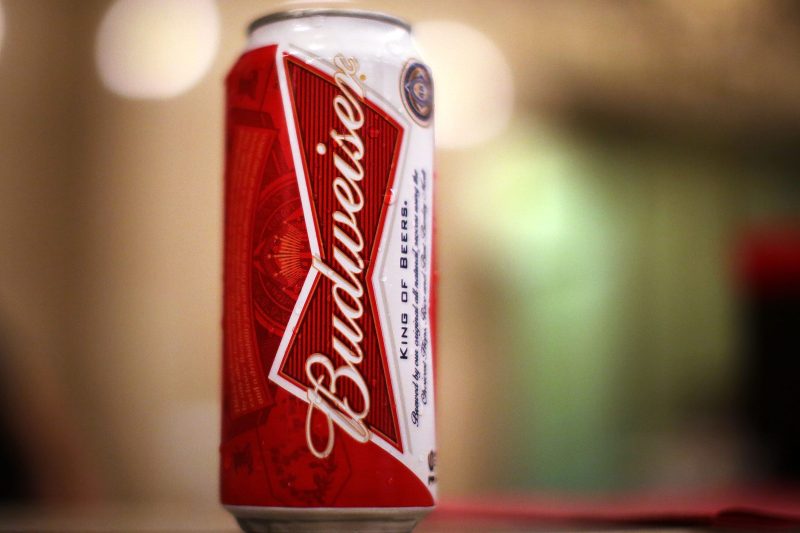
Anheuser-Busch is back.
Between 1999 and 2008, the company owned America’s biggest advertising stage. With Bud Light and Budweiser at the forefront, the brand didn’t just compete in the Super Bowl — they dominated it, winning the top spot in the USA TODAY Ad Meter ratings 10 years in a row.
“They knew what the game was for and they craved great work,” said Mark Gross, co-founder and co-CCO of Highdive Advertising, who worked on an array of Anheuser-Busch Super Bowl ads during the 1990s and 2000s. “They wanted to be No. 1 on the USA TODAY (Ad) Meter.”
Ad Meter: Rate best and worst commercials this year!
The Clydesdales. The frogs. The “Whassup” guys. Dogs fetching Bud Light. Year after year, the beer giant’s ads captured America’s hearts, laughs, and votes.
Then the dynasty cracked.
After winning the 2015 USA TODAY Ad Meter ratings, the Anheuser-Busch family entered a long drought, and eight other brands claimed the top spot over the next nine years.
That changed last year, however, when Budweiser’s “First Delivery” ad featuring the Clydesdales beat out Lay’s and Michelob Ultra for the No. 1 position.
That victory feels like a comeback. But digging into the data presents something else: The company didn’t return to the old world. It won in a new one where dominance is harder to sustain and Super Bowl ad competition has never been fiercer.
The dynasty years
At its peak, the Bud empire was inescapable.
In 2003, Anheuser-Busch alone ran 12 Super Bowl commercials, a figure that accounted for 21% of all Ad Meter-tracked ads during that year’s big game. Six of those 12 finished in Ad Meter’s top 10. The company’s strategy was simple: flood the zone.
“They really wanted to own the Super Bowl and make sure they won the big game,” Gross said.
In total, Budweiser and Bud Light combined to claim exactly half of the top 10 spots during the decade-long dynasty of the late ‘90s and early aughts.
Between 2015 and 2024, by contrast, no more than one Anheuser-Busch brand broke the top 10 each year. And in total for the decade following the 2015 win, the Bud family held just 8% of the top 10 positions.
What changed? One potential factor: The economics of Super Bowl advertising, and with them, the entire competitive landscape.
The $8 million bet
In 1989, the first year Ad Meter ran, a 30-second Super Bowl spot cost $675,500. By 2024, advertisers were paying $7 million. And this year, the total has crept even higher to $8 million per ad, with reports showing it’s now reached $10 million.
That’s a nearly 12-fold increase, and one that far outstrips inflation. If Super Bowl ad prices had kept pace with the consumer price index, a 30-second spot would have cost about $1.8 million today, not $8 million. Advertisers are paying a 300%-plus premium for the privilege of the Super Bowl’s massive audience.
“It’s really a scarcity play,” said Swapnil Patel, co-president of media agency Attention Arc and who has experience buying Super Bowl ads for clients. “You can charge a premium for something that is very rare.”
“You’re not buying it for the impressions,” he added. “You’re buying it for the possibility to have some cultural orchestration.”
That cost explosion has fundamentally changed advertiser behavior.
“Spots have just gotten very expensive,” Gross said. “Nowadays you’re seeing a lot of A-list celebrities — it’s almost par for the course,” he added, pointing to celebrity fees plus production and media costs as a reason why many brands now stick to a single spot.
In 2003, when Anheuser-Busch ran 12 ads at $2.2 million each, its total Super Bowl ad spend was about $26 million. Running that same 12-ad campaign in 2026 would cost nearly $100 million — a sum that’s difficult to justify for even the world’s largest beer company.
The result means that brands have largely abandoned a “flood the zone” approach for a “one perfect ad” strategy.
That pressure can backfire when advertisers try to do too much at once. “It’s like the game of golf,” Gross said. “The harder you swing, the worse the swing.”
The crowded stage
The shift shows clearly in the data.
In 2003, 34 brands advertised during the Super Bowl, and 59% of them ran just one commercial. In 2025, 56 different brands ran Super Bowl ad spots (a 70% increase) and 96% ran a single ad.
And a “single ad” is rarely just one asset anymore. Patel said brands now treat the game as a “mini-plan” spanning the lead-up and aftermath.
“If you wait to the game to launch, you get the element of surprise, but you have no awareness built. That’s where the teaser buys play into this… because you’re trying to amortize the value across multiple days.”
The maximum ads by any single brand in a given year tells the story in miniature: the 12 Anheuser-Busch ran in 2003 was down to two by one brand in 2025 (the NFL and Homes.com were the only brands to run a pair of commercials last year).
Even Budweiser’s recent presence has been modest by historical standards. Since 2020, Anheuser-Busch, Budweiser, and Bud Light have collectively run two ads per Super Bowl, a far cry from the dozen spot blitzes that graced airwaves during the early 2000’s.
New winners, new playbook
The diversity of recent Ad Meter winners underscores the new reality. From 2016 to 2024, the top spot went to Hyundai, Kia, Amazon, the NFL, Jeep, Rocket Mortgage (twice), The Farmer’s Dog, and State Farm — eight different brands in nine years.
Car brands were some of the first to break the beer domination as Hyundai’s win in 2016 was followed by Kia in 2017 before Jeep took No. 1 in 2020. The automotive onslaught was a hallmark of the 2010s; for instance, 39% of all Super Bowl ads in 2011 were for automotive brands.
The diversification has continued into the 2020s with brands that had little in terms of Super Bowl ad pedigree.
Rocket Mortgage won in 2021 and 2022 despite having only released one prior Super Bowl ad (in 2018). Then, The Farmer’s Dog, a pet food delivery service, won in 2023 with an emotional ad that followed a dog through its owner’s life milestones. It was the company’s first, and so far, only Super Bowl ad.
Most recently, State Farm won in 2024 after releasing its maiden Super Bowl ad in 2021.
“You have to be very conscious of telling a story that really integrates your brand into the story and make sure that’s the focal point,” said Gross, whose agency was the creative force behind Rocket Mortgage’s and State Farm’s winning spots. “I think we did that with State Farm. I think Farmer’s Dog did that.”
The new normal
Budweiser’s 2025 victory is worth celebrating for the brand. After nearly a decade of watching other companies claim the crown, the Clydesdales were champions again.
But the brand will be hard-pressed to kickstart another dynasty. In an era of $8 million ad spots and 50-plus brands vying for attention, the Super Bowl advertising crown is now truly up for grabs every year.
As Patel put it, there’s still no other moment where brands can “scream from a mountaintop” the way they can on Super Bowl Sunday — but in a crowded field, “the expected is not enough.”
In the end, the beer dynasty has given way to democracy. And when it comes to rating this year’s Super Bowl commercials, that might make for a more interesting game within the game.